
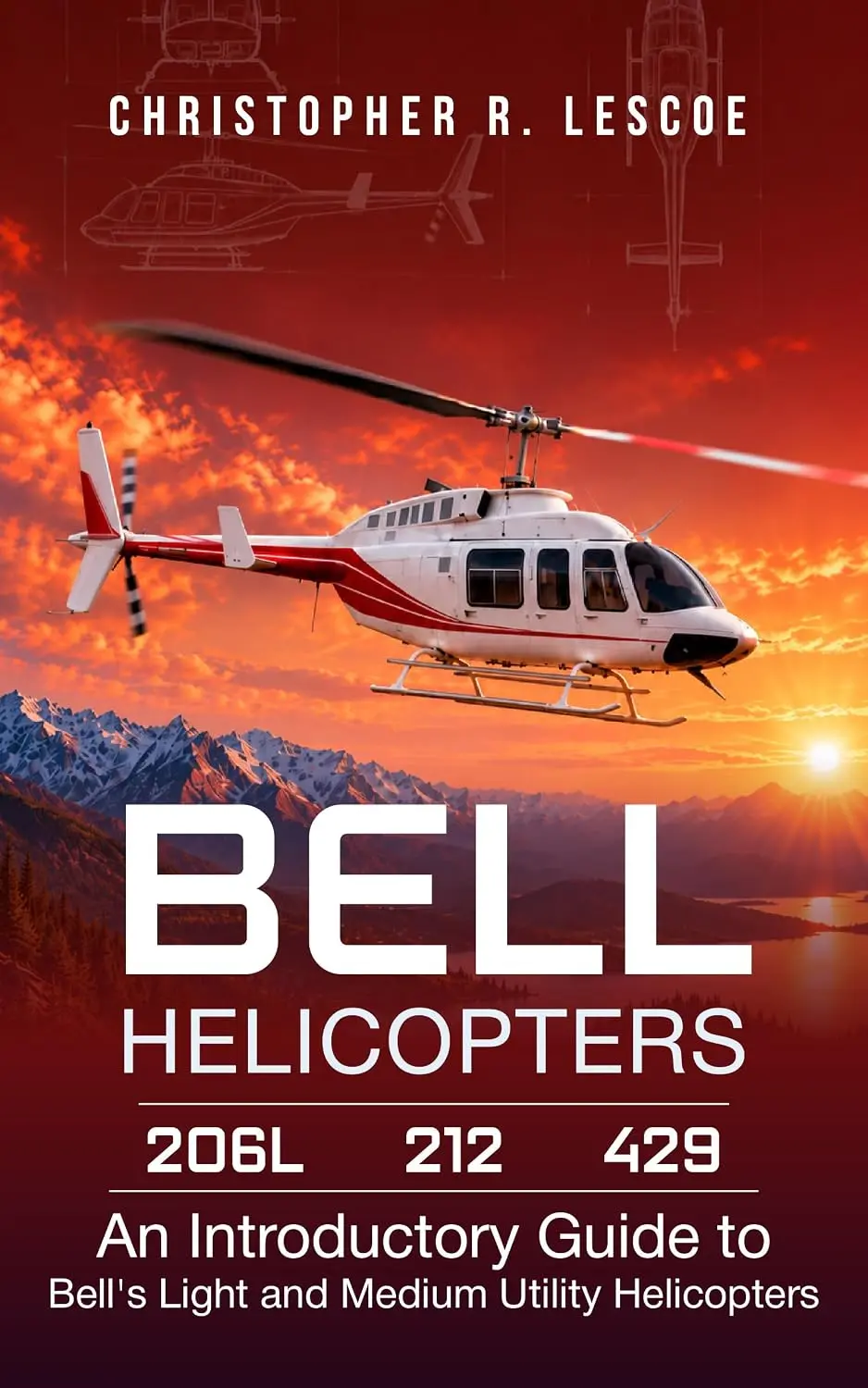

Inside This Book, You’ll Explore:
- Bell 206L LongRanger: Airframe construction, rotor systems, transmission, flight controls, hydraulics, Allison 250 powerplant, fuel and electrical systems, instruments, and operations.
- Bell 212: Aircraft development, airframe configuration, main rotor, transmission, anti-torque systems, flight controls, hydraulics, PT6T Twin-Pac powerplant, fuel, electrical, and utility systems.
- Bell 429: Modern airframe design, composite construction, four-blade rotor system, transmission, flight controls, hydraulics, PW207D1 engines, integrated avionics, automatic flight, and safety systems.
What You’ll Learn
- How helicopter airframes and structural components are designed.
- How main rotor and tail rotor systems produce lift and directional control.
- How transmissions transfer engine power to the rotor systems.
- How cyclic, collective, and anti-torque controls work.
- How hydraulic, electrical, and fuel systems support aircraft operation.
- How turbine engines and auxiliary systems function.
- How cockpit instruments, avionics, and automatic-flight systems support pilots.
- How aircraft design, redundancy, and system integration differ across three Bell helicopter generations.
By examining the Bell 206L, 212, and 429 individually, readers can better understand the evolution of Bell’s utility helicopter designs—from mechanical simplicity to modern electronic integration.
Whether you’re an aviation enthusiast seeking a deeper understanding of helicopters, a student building technical knowledge, or an aspiring aviation professional preparing for further study, this book offers an accessible introduction to three notable aircraft.
Discover the systems, engineering, and operational principles that make the Bell 206L, Bell 212, and Bell 429 distinctive members of the Bell helicopter family.

Reviews
There are no reviews yet.