
- A&P Mechanic Training
Part 147 Aviation Maintenance Training: Your Path to FAA Certification
Part 147 Training for Future A&P Mechanics
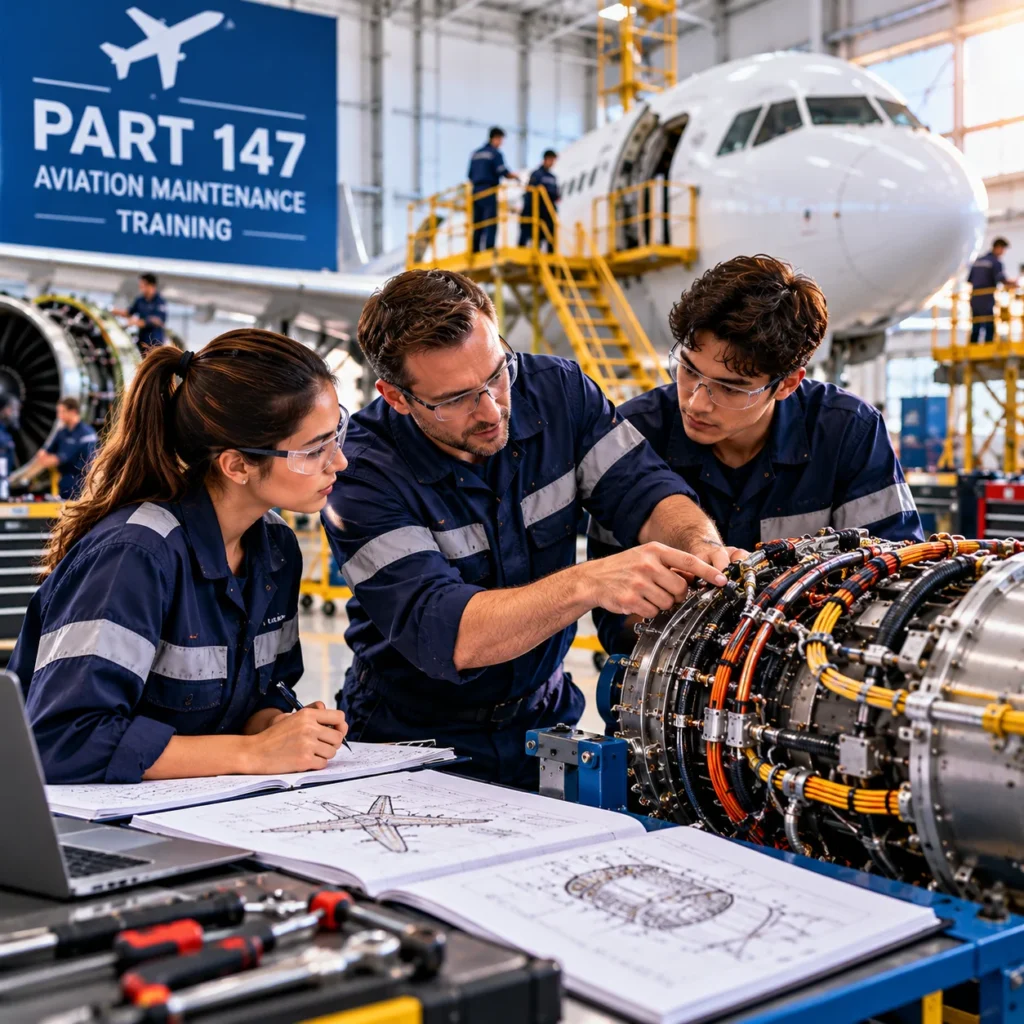
If you’re considering a career as an aviation maintenance technician, you’ve likely come across the term “Part 147.” It’s the FAA regulation that governs approved aviation maintenance technician schools (AMTS). Whether you’re looking to earn your A&P license, transition from military service, or start a new career, understanding Part 147 is your first step.
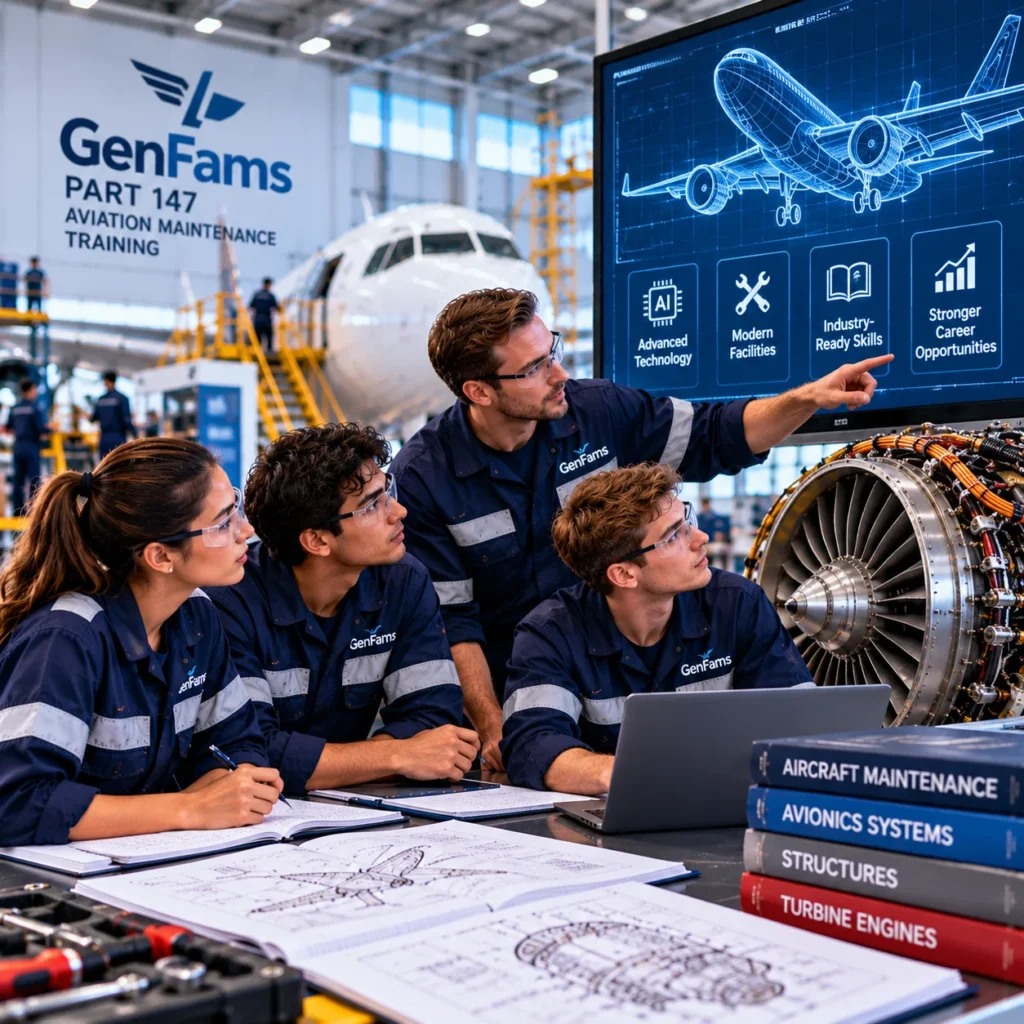
At GenFams, we provide Part 147-compliant general familiarization training designed to help you build the foundational knowledge you need, whether you’re preparing for a full A&P program, transitioning from military service, or simply want to understand aircraft systems at a deeper level.
Ready to start your journey?
What Is Part 147?
Part 147 is the section of Title 14 of the Code of Federal Regulations that sets the standards for FAA-certificated Aviation Maintenance Technician Schools (AMTS). It prescribes the requirements for issuing school certificates, associated ratings, and the general operating rules for certificate holders. In short, if you want to become an FAA-certificated mechanic (A&P), attending a Part 147 school is the most direct path.
The regulation covers everything from facilities and equipment to instructor requirements and curriculum standards. Schools must have an FAA-approved curriculum that meets the minimum requirements set forth in their operations specifications. Student-to-instructor ratios are capped at 25:1, and schools must maintain a quality control system to ensure students meet the required standards.
History
Why Part 147 Exists
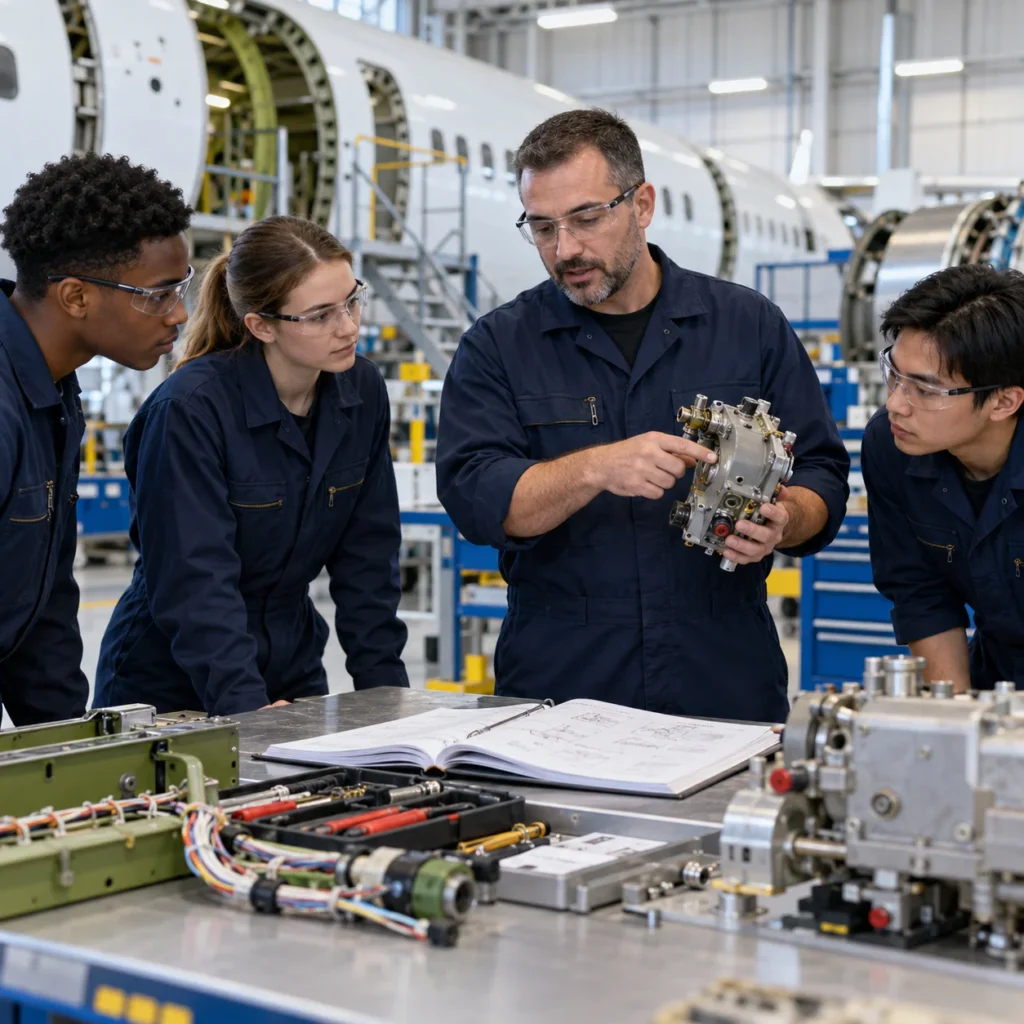
The current training requirements for aviation maintenance technician certification, reflected in Part 147, were developed as part of the 1968 National Study of the Aviation Mechanics Occupation, commonly known as the Allen Study. That study identified a critical need: the aviation industry required a standardized, regulated approach to training mechanics and technicians. Before that, training was inconsistent, and the quality of mechanics entering the workforce varied widely.
The regulation was originally established under the Civil Aviation Administration and re-codified into 14 CFR in 1962. A major revision of Part 147 became effective on May 2, 1970, requiring all then-certificated schools to be recertified by May 1972. This revision established the framework that would govern AMTS for decades.
But the aviation industry didn’t stand still. Aircraft became more complex. Technology advanced. And the old training model, built around fixed hourly minimums and rigid curriculum requirements began to show its age.
Regulatory Update
The 2022 Part 147 Reform: A New Era
In 2022, the FAA made the most significant revision to Part 147 in over 50 years. The updated regulation shifted from prescriptive time-based requirements to an outcome-based model. The previous fixed hourly minimums for curricula were removed, allowing schools to focus on competency-based training rather than seat time.
This was a game-changer.
Under the old rules, schools were required to deliver a specific number of hours of instruction, regardless of whether students actually mastered the material. The new framework aligns training with the FAA Mechanic Airman Certification Standards (ACS), emphasizing specific learning objectives tied to airframe and powerplant knowledge. Schools now have the flexibility to design programs that prepare students for real-world maintenance challenges, not just to fill a seat for a set number of hours.
The 2022 reform also opened the door for more innovative training models, including online and hybrid approaches. While hands-on practical training remains essential, the revised rule empowers Part 147 schools to deliver theoretical instruction through distance learning, without requiring learners to sit in a traditional classroom for every hour of instruction.
Industry Demand
The AMT Shortage: Why Part 147 Training Matters Now More Than Ever
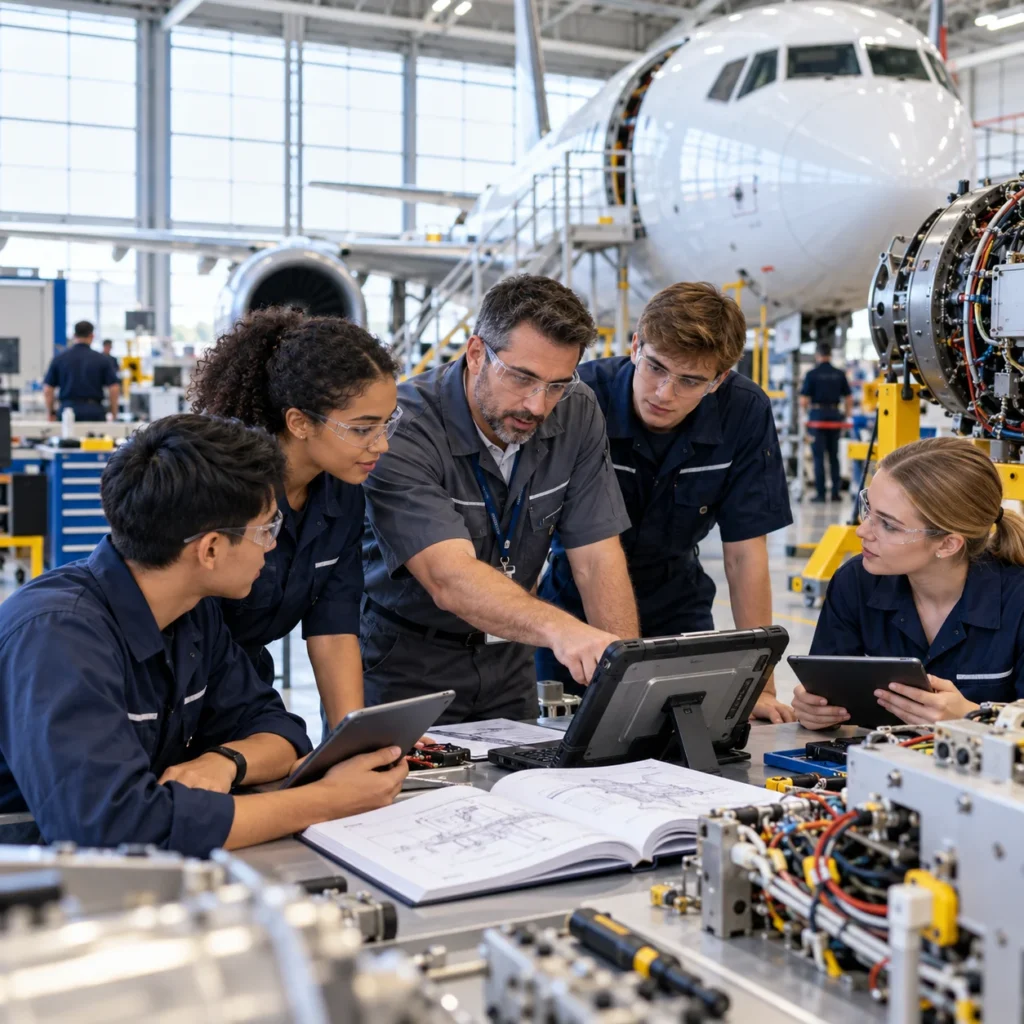
The aviation industry is facing a critical shortage of certificated mechanics. The commercial aviation industry will need to hire 123,000 aviation maintenance technicians in North America through 2044. The U.S. aviation maintenance workforce faces a 10% shortage in certificated mechanics for 2025, and that gap is projected to persist through at least 2035.
MROs report growing backlogs, and the number of newly licensed A&P mechanics entering the workforce each year is insufficient to offset retirements and expanding maintenance requirements. In short: there has never been a better time to enter the aviation maintenance profession.
Part 147 schools are the primary pipeline for new mechanics. Graduates of FAA-approved AMTS programs are eligible to test for the mechanic certificate, provided they meet the other eligibility requirements for age and English language proficiency. And with the 2022 reforms allowing more flexible training models, earning your A&P license is more accessible than ever.
Your Path to FAA Certification: The A&P License
An Airframe and Powerplant (A&P) certificate is the gold standard for aviation maintenance professionals. To earn one, you must:
- Be at least 18 years old
- Be able to read, write, speak, and understand English
- Complete 18 months of practical experience for each rating (or 30 months for both), or graduate from an FAA-approved Aviation Maintenance Technician School (AMTS)
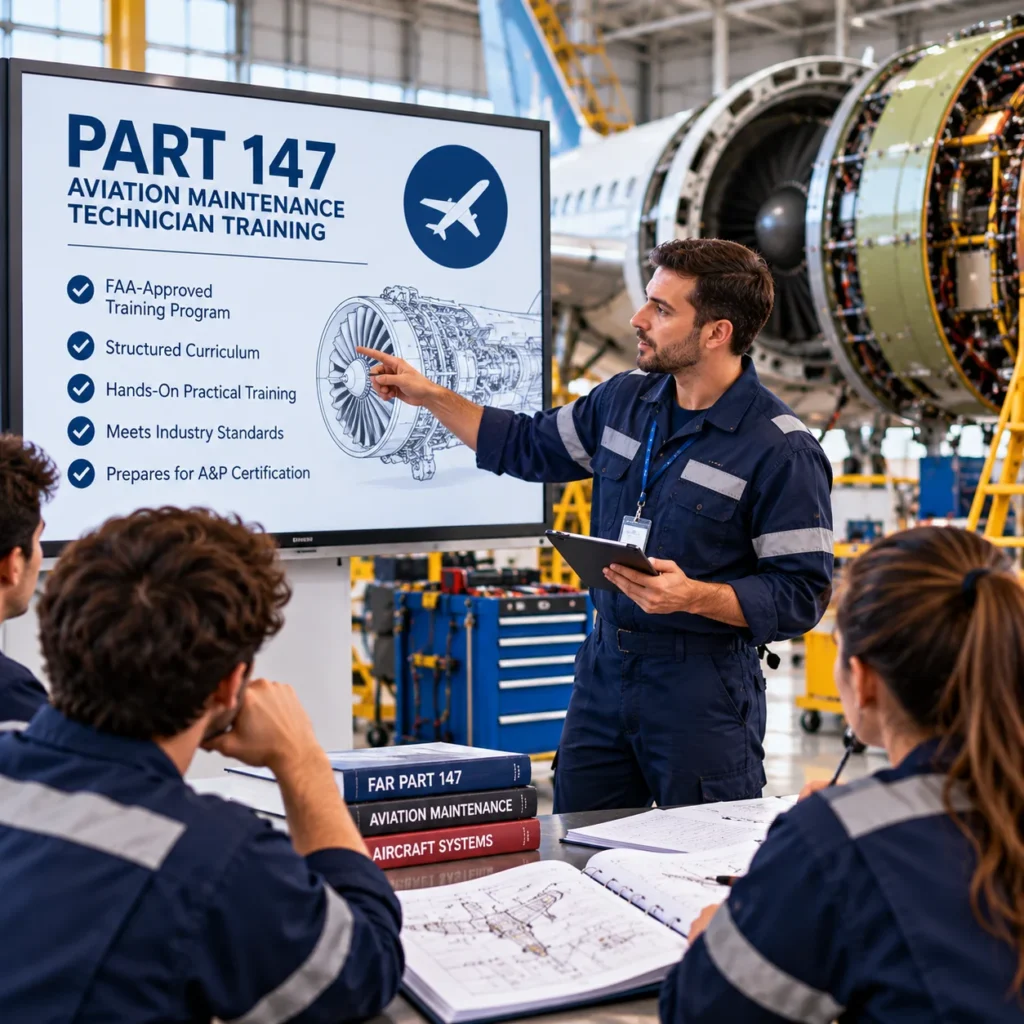
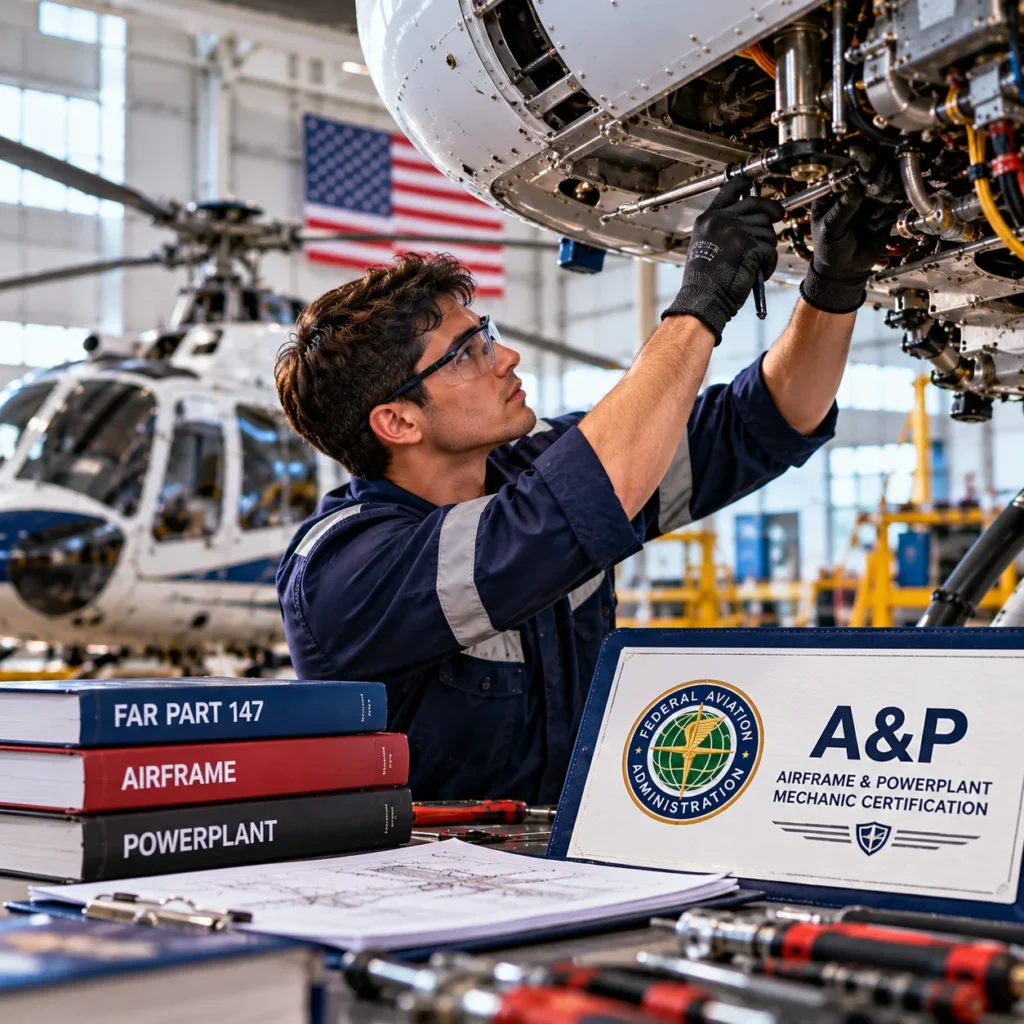
A graduation certificate from a Part 147 school makes you eligible to test for the mechanic certificate. This is why choosing a Part 147-compliant training program is so important, it’s the most direct path to certification.
How GenFams Supports Your Part 147 Journey
At GenFams, we’re not a full Part 147 school, not yet. But we are actively pursuing FAA Part 147 certification as an Aviation Maintenance Technician School. While our certificate is pending, our courseware already meets the rigorous standards required for general familiarization training, and we are actively building the infrastructure to support full Part 147 compliance upon approval.
Our general familiarization courses are designed to provide the foundational knowledge you need to:
- Prepare for a full A&P program: Build a solid understanding of aircraft systems before you enroll.
- Transition from military to civilian aviation: Our courses align with FAA ACS and EASA Part-66 standards, helping veterans and active-duty service members bridge the gap.
- Advance your career: Whether you’re a mechanic, engineer, pilot, or enthusiast, our courses deepen your understanding of modern aircraft systems.
We partner with Mx organizations and MROs worldwide, helping them streamline training and reduce costs. We provide Military to Civilian transition training, helping veterans prepare for an informed and successful commercial aviation career.
Curriculum
What You’ll Learn in a Part 147-Aligned Program
A Part 147-aligned curriculum covers three main subject areas:
General
Basic mathematics, physics, electricity, and aircraft drawing
Airframe
Structures, flight controls, hydraulics, landing gear, and environmental systems
Powerplant
Engine theory, fuel systems, ignition, and troubleshooting
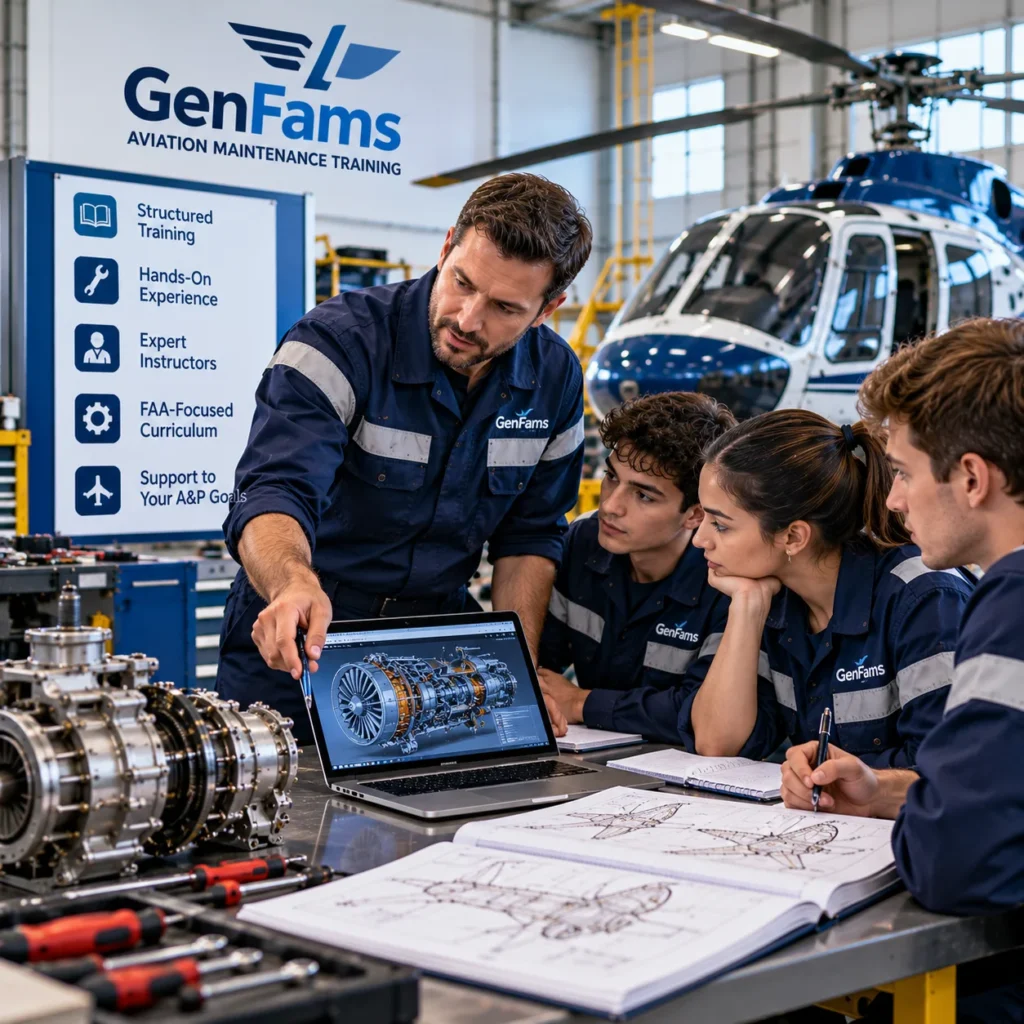
Our courses at GenFams mirror this structure, covering systems through an ATA-104 compliant approach aligned with FAA ACS standards. Each course includes detailed system descriptions, component location guides, safety precautions, section quizzes, and a final examination.
Compare Your Options
Part 147 vs. OJT: Which Path Is Right for You?
There are two primary paths to earning your A&P certificate:
Part 147 School
Structured, classroom-based training with FAA-approved curriculum. Graduates are eligible to test for the mechanic certificate immediately upon completion.
On-the-Job Training (OJT)
Practical experience gained through working in the industry. You must accumulate 18-30 months of experience before you’re eligible to test.
Both paths lead to the same destination, but Part 147 schools offer a faster, more structured route: especially if you’re new to aviation.
The Future of Part 147 Training
The 2022 reforms have opened the door to more innovative, accessible training models. FAA Part 147 certified online schools are increasingly recognized as a viable option for theoretical instruction. King Schools, for example, offers an online A&P course with 68.5 hours of online knowledge lessons and 531.4 hours of practical elements, compliant with the new Part 147 requirements.
GenFams is part of this revolution. Our platform delivers ATA-104 compliant general familiarization training across a growing library of aircraft types, from Boeing and Airbus to regional jets, business aircraft, and helicopters. We provide organizations with a scalable, enterprise-ready LMS that enhances existing training programs, allowing for consistent, trackable, and cost-effective workforce development.
Ready to Take the Next Step?
Whether you’re just starting your aviation career, transitioning from military service, or looking to expand your expertise, GenFams is here to help. Our Part 147-aligned courses give you the foundation you need to succeed.
Explore our courses from the Boeing 737 MAX to the Airbus A330, from the Bombardier Global 7500 to the Robinson R44. Each course is structured around ATA chapters, includes system descriptions, component location guides, and safety precautions.
GenFams: Lift your knowledge. Lower your costs. Launch your future.